Looking to build this? See our ehr integration service page.
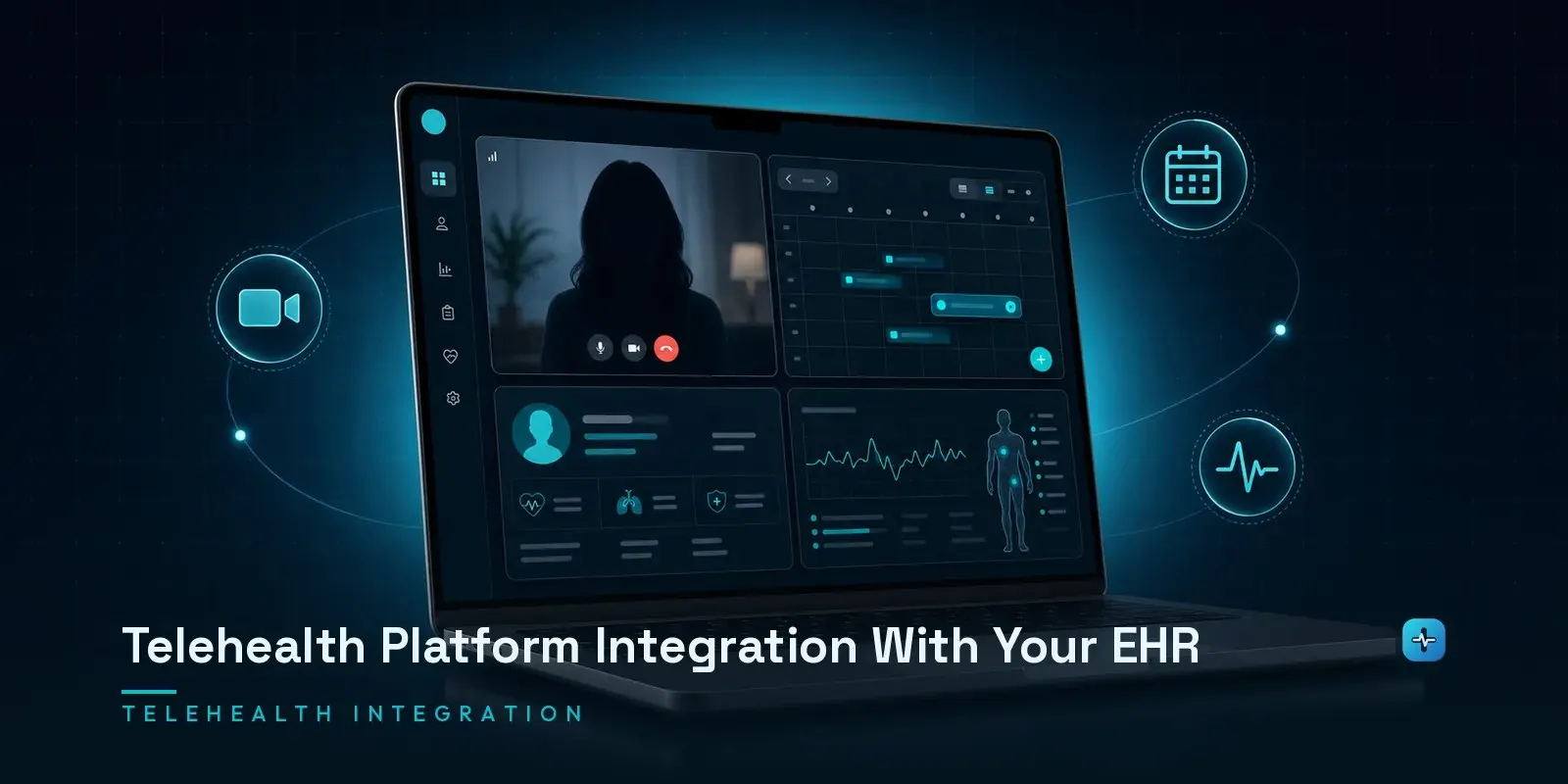
Telehealth Platform Integration With Your EHR
The video call is the easy part. The four integration points a telehealth platform needs — scheduling, clinical context, documentation write-back, billing.
Read the guide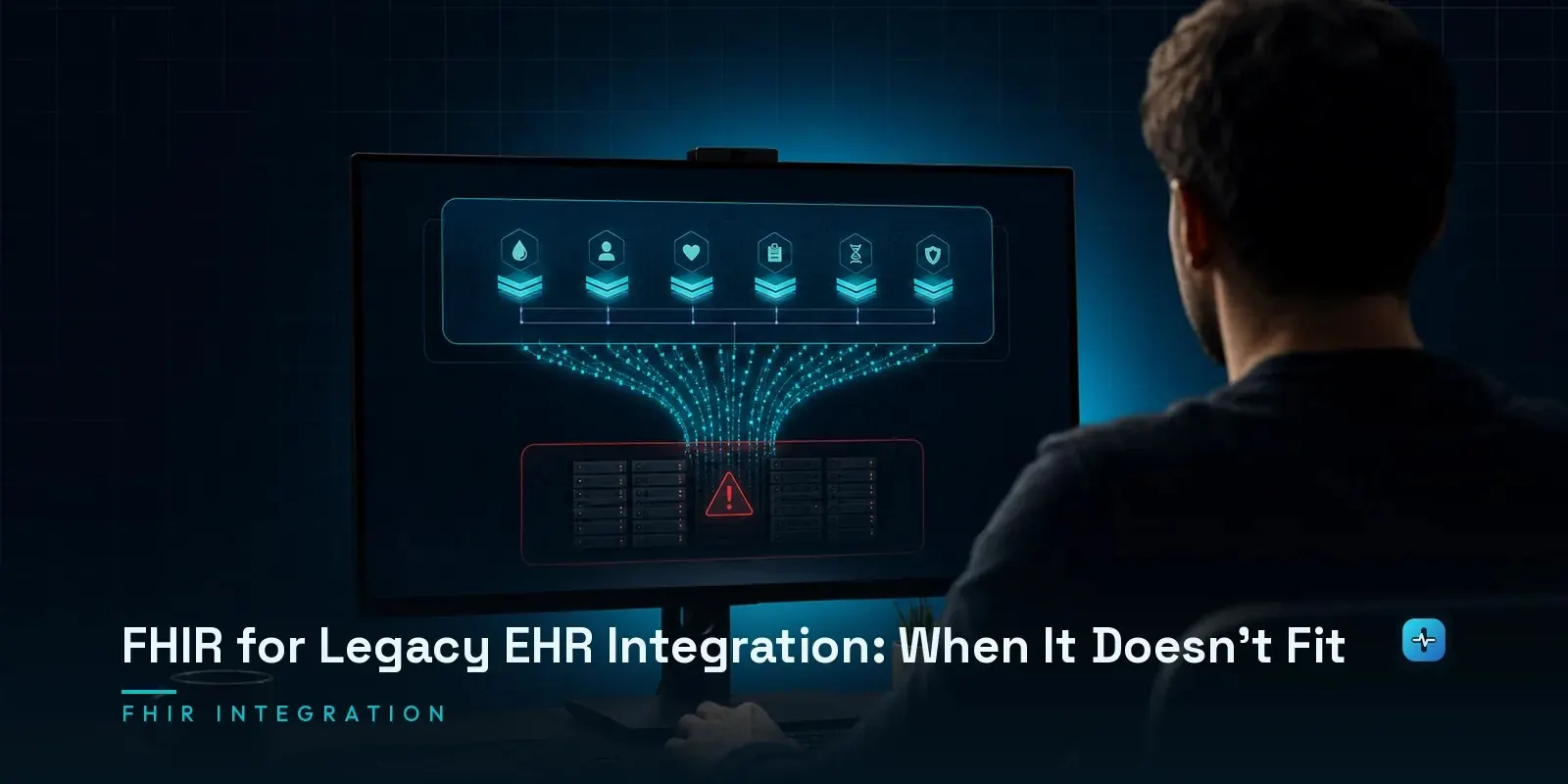
FHIR for Legacy EHR Integration: When It Doesn't Fit
A FHIR facade makes legacy data well-formed, not interoperable. The four failure modes — terminology, identity, missing fields, performance.
Read the guide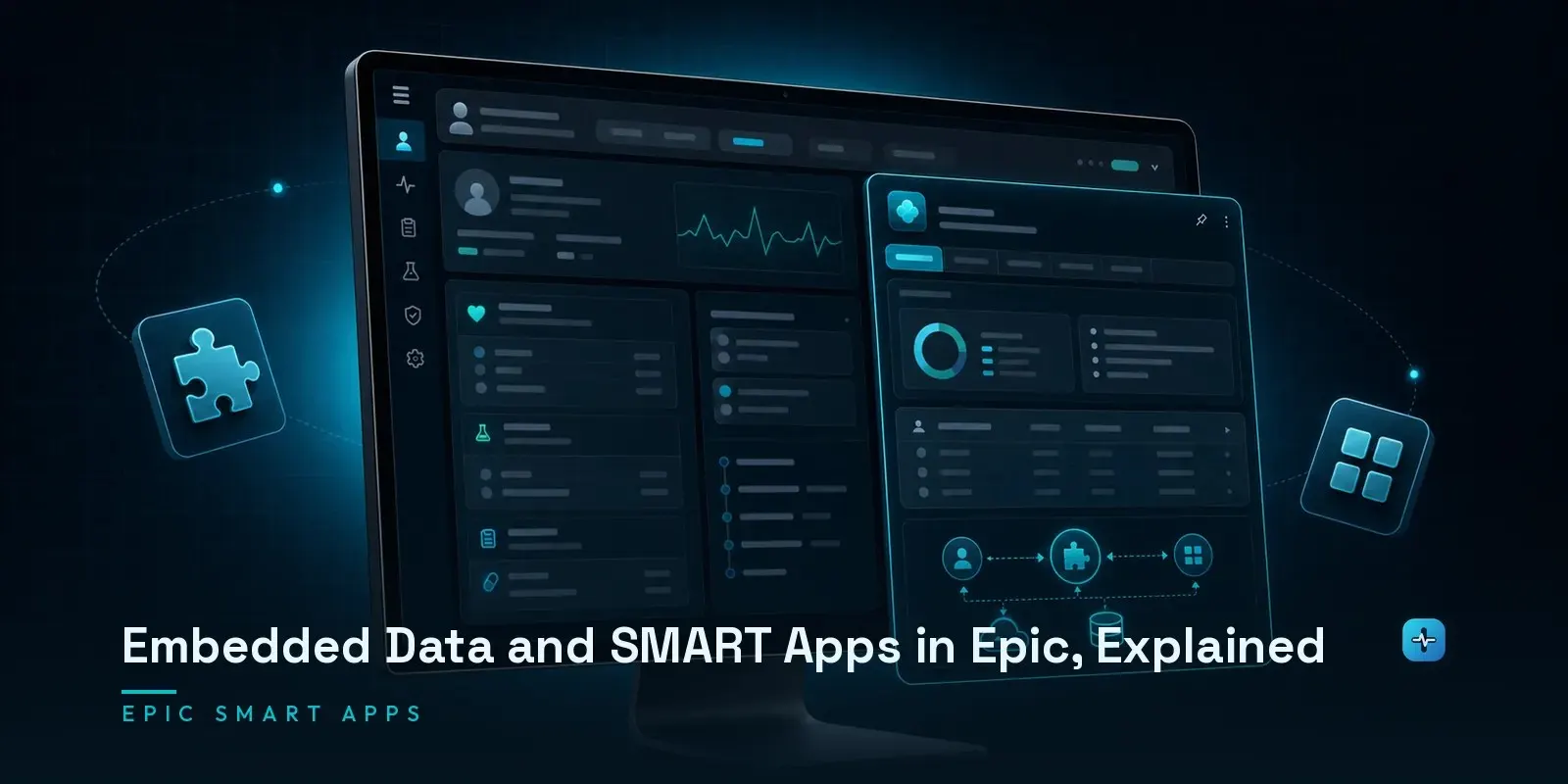
Embedded Data and SMART Apps in Epic, Explained
How SMART on FHIR apps run inside the Epic chart — EHR launch vs standalone, what context Epic passes, scopes, registration, and rendering constraints.
Read the guide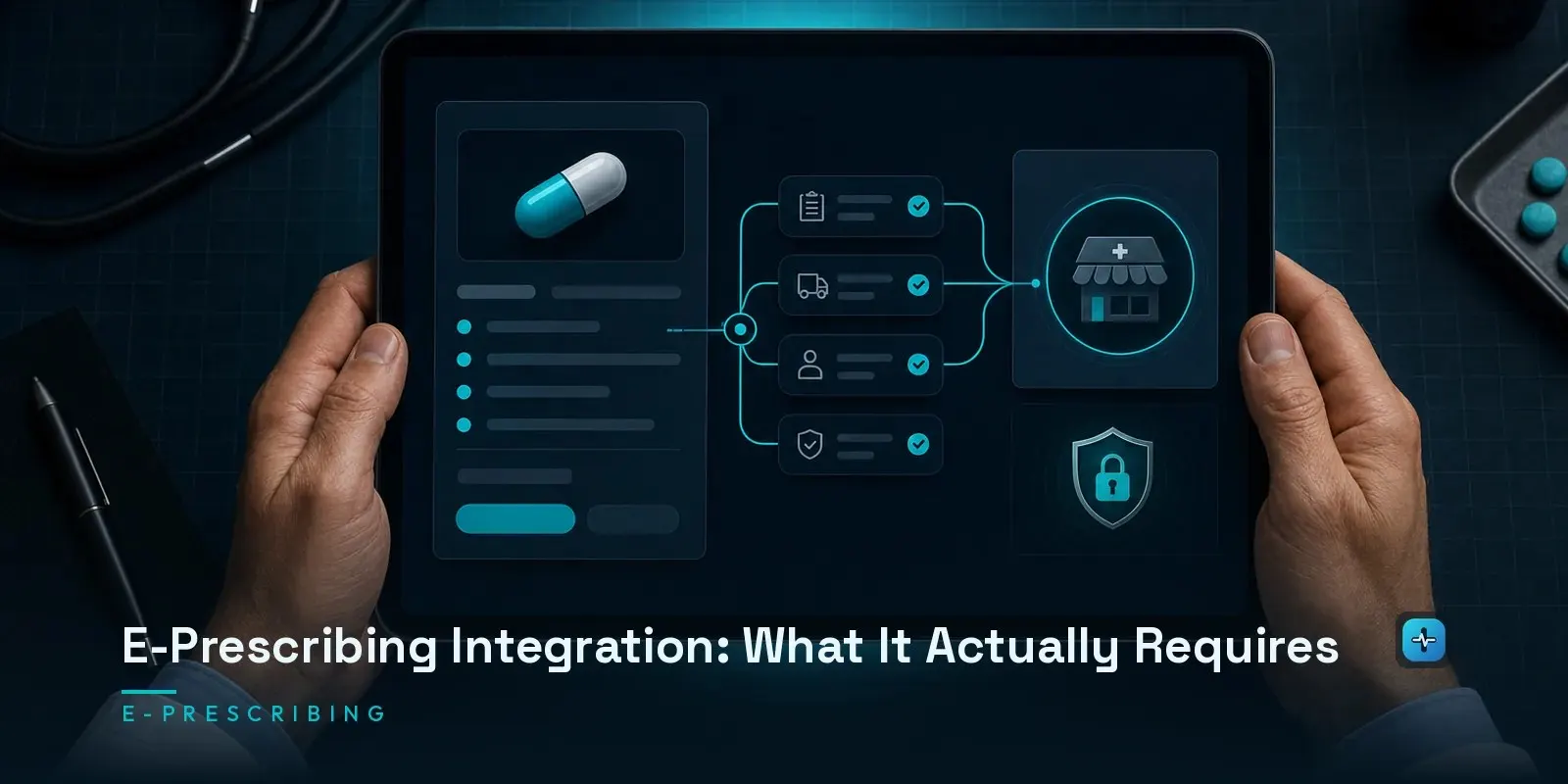
E-Prescribing Integration: What It Actually Requires
E-prescribing is a compliance project with a software component. State mandates, EPCS identity rules, NCPDP SCRIPT conformance, and what each demands.
Read the guide
Cerner FHIR API vs. HL7 v2: Which Should You Use?
Cerner supports both. The right choice follows the data flow — event-driven v2 for ADT/orders/results, FHIR for app-style reads and writes. Five scenarios.
Read the guide
Pharmacy Software Integration with an EHR: How It Works
Pharmacy integration is three separate connections — SCRIPT to prescribers, NCPDP Telecom to PBMs, and HL7/FHIR back to the clinical record. Here's each.
Read the guide
FHIR API Integration: A Practical Walkthrough
A step-by-step FHIR integration walkthrough — choosing R4, SMART on FHIR auth, reading the CapabilityStatement, mapping resources, and handling gaps.
Read the guide
Becoming a Cerner Vendor Partner: What It Takes
You may not need Oracle Health partnership to integrate at all. When client-sponsored access is enough, and when the formal partner track actually matters.
Read the guide
Epic EHR Write-Back Integration: How It Works
Writing data back into Epic is a governance problem, not an API problem. Which resources support writes, how scopes are approved, and what review actually asks.
Read the guide
Cerner Millennium API Integration Guide
A practical guide to Oracle Health Ignite APIs — FHIR R4 resources, SMART on FHIR authorization, scopes, sandbox limits, and when to use HL7 v2 instead.
Read the guide
Surescripts Integration for a Custom EHR: What It Takes
There is no self-serve Surescripts API. What certification actually requires — NCPDP SCRIPT, the transaction set, EPCS, and realistic timelines for a custom EHR build.
Read the guide
Cerner Integration: What Actually Happens During the Build
A Cerner integration build runs through five phases, and the one teams underestimate is access — you cannot self-provision into Oracle Health. Here's what actually happens, phase by phase.
Read the guide
Healthcare Data Integration Beyond HL7 and FHIR
Protocol choice is only step one. See the security, reliability, mapping, and maintenance work real healthcare data integration requires.
Read the guide
HL7 vs. FHIR: What Actually Matters for Integration Cost
HL7 v2 and FHIR aren't just different formats — they have different cost curves. See what actually drives integration cost and timeline.
Read the guide
Epic vs. Cerner vs. athenahealth: EHR Integration Partner
Epic, Cerner, and athenahealth integrations aren't interchangeable. Compare architectures, timelines, and how to pick the right partner.
Read the guide
Epic Integration: What Actually Happens During the Build
See exactly what happens in an Epic EHR integration build — access, credentialing, testing, go-live, and what causes delays.
Read the guide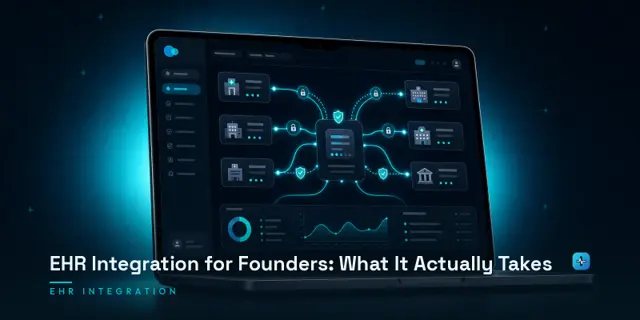
EHR Integration for Founders: What It Actually Takes
What HIPAA-compliant EHR integration really involves — HL7 vs. FHIR, Epic and other vendors, and the security work most founders don't budget for.
Read the guideHave a build in mind already?
Skip the reading list — tell us what you're building and we'll give you a straight answer on scope and cost.