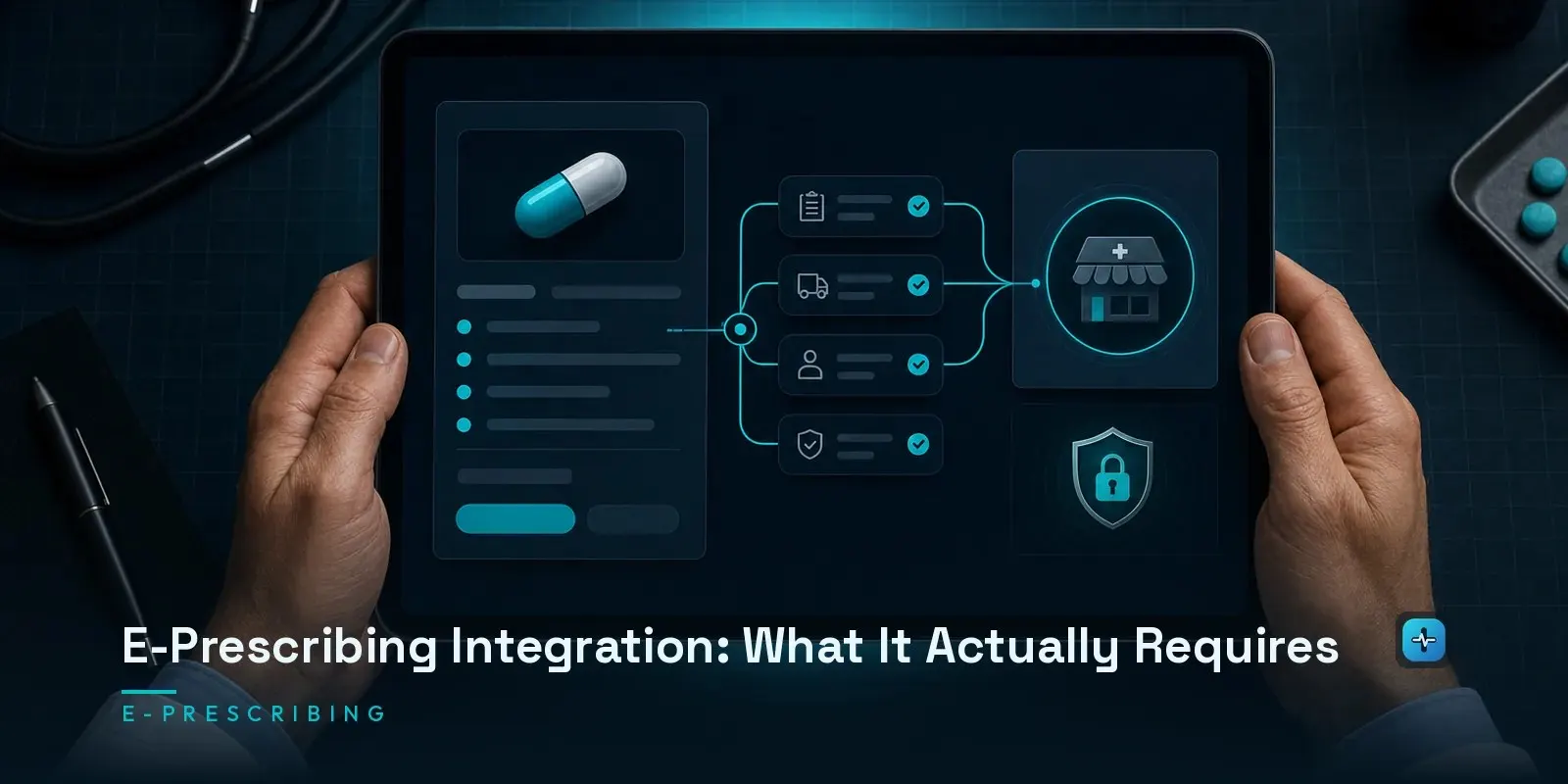
E-prescribing is a compliance requirement with a software component, not the other way around, and the technical connection is the smallest part of it. On the regulatory side, most states now mandate electronic prescribing for at least some prescription classes, and controlled substances carry a federal requirement that prescribing be done through an EPCS-certified system. On the identity side, the DEA rules for EPCS reach much further into an application than teams expect: prescribers must be identity-proofed, two-factor authentication is mandatory at the point of signing, and the application’s logging must be tamper-evident — none of which can be bolted on late. The technical work itself is conformance against the NCPDP SCRIPT standard for the transaction types you support, routed over the Surescripts network. Teams that scope only the integration and treat certification and identity as paperwork consistently discover the requirement set after the build is otherwise complete.
E-Prescribing Is a Compliance Project
Say it plainly at the outset, because it reframes the whole scoping conversation: e-prescribing is a compliance requirement that happens to have a software component. Teams that scope it the other way around — as an integration task with some compliance boxes attached — routinely discover the real shape of the requirement partway through the build, once it’s already the expensive way to find out.
The Regulatory Requirements
State law is more fragmented here than most teams expect. 35 states now require e-prescribing in some form — a handful, including California, Delaware, Florida, Iowa, Michigan, Minnesota and New York, mandate it for essentially all prescriptions, controlled and non-controlled alike, while others require it only for controlled substances or specific drug schedules. Do not build against a generalized assumption of “e-prescribing is required” — verify the specific requirement in every state your software will actually operate in, because the rules genuinely differ and they continue to expand.
On the federal side, the requirement is sharper: under Section 2003 of the SUPPORT Act, Schedule II–V controlled substance prescriptions covered under Medicare Part D have been required to be transmitted electronically since January 1, 2021, with CMS actively enforcing compliance since 2023. Prescribers have to hit a real threshold — 70% of qualifying Schedule II–V prescriptions transmitted electronically for measurement year 2024 — with a small-prescriber exception for anyone issuing 100 or fewer qualifying prescriptions in a year. If your product serves Medicare Part D prescribers writing controlled substances, this isn’t optional infrastructure — it’s a compliance floor your users are personally accountable for meeting.
The Technical Requirements: NCPDP SCRIPT
The technical layer is the same NCPDP SCRIPT conformance I go through in full in the dedicated Surescripts certification guide — NewRx, RefillRx, CancelRx and ChangeRx at minimum, certified through Surescripts rather than a self-serve API. If you’re at the point of actually building this leg, that post has the certification-process detail; this one is about the full requirement set around it.
The Identity Requirements: What EPCS Demands of Your App
This is the section most content about e-prescribing mentions in a sentence and moves past — and it’s the one that actually reaches into your application’s architecture. If your product will prescribe controlled substances, EPCS under 21 CFR Part 1311 requires prescribers to be identity-proofed to a real assurance standard before they can prescribe, two-factor authentication combining two genuinely distinct factor categories at the exact moment a prescription is signed, and tamper-evident logging that a third-party auditor can review. That last piece isn’t a one-time gate — EPCS systems require re-audit by a DEA-approved organization roughly every two years to keep operating, which makes it a standing operational obligation rather than a launch checkbox.
None of that bolts on cleanly after the fact. If EPCS is anywhere on your roadmap, design the auth architecture around it from day one rather than retrofitting a simple username-and-password system later.
The Operational Requirements
Beyond the regulatory and identity pieces, there’s a real ongoing operational load: prescriber enrollment and credentialing, directory maintenance as pharmacies and prescribers change, error handling for rejected or malformed transactions, and the support burden of a system where a failure means a patient doesn’t get medication rather than a dropped API call. Budget for this as a standing team responsibility, not a project that ends at launch.
What Drives the Cost
The honest cost drivers, without a fake range that would be meaningless without knowing your specific scope: how many transaction types beyond the SCRIPT minimum you need, whether EPCS is in scope, how many states’ specific mandates you’re actually operating under, and how much of your existing architecture already resembles what certification expects versus how much needs retrofitting.
A Realistic Sequence for a Build
Start the Surescripts certification track and, if applicable, the EPCS identity-proofing and two-factor design in parallel with core product development — the same sequencing recommendation I make in the Surescripts guide, worth reinforcing here because it applies to the entire requirement set, not just the network certification piece. Teams that treat compliance as the last step before launch are the ones who discover the multi-month delay after the product is otherwise finished.
Next Steps
If e-prescribing is part of a custom EHR build you’re scoping, treat the regulatory and identity requirements as architecture decisions, not a checklist to run through near launch. Our team has been through the full requirement set — state mandates, EPCS, and the Surescripts certification process together — more than once. Talk to us before you scope the timeline.